50th Birthday Thoughts
This week marked my 50th birthday! How does my age prompt an artmaking-related blog post?
The short answer is: recalibration. A milestone birthday is a good time to reassess a few things. And the reason I commit my thoughts to writing here is to more clearly understand myself and to share the behind-the-scenes parts of my artmaking with you in a more narrative form.
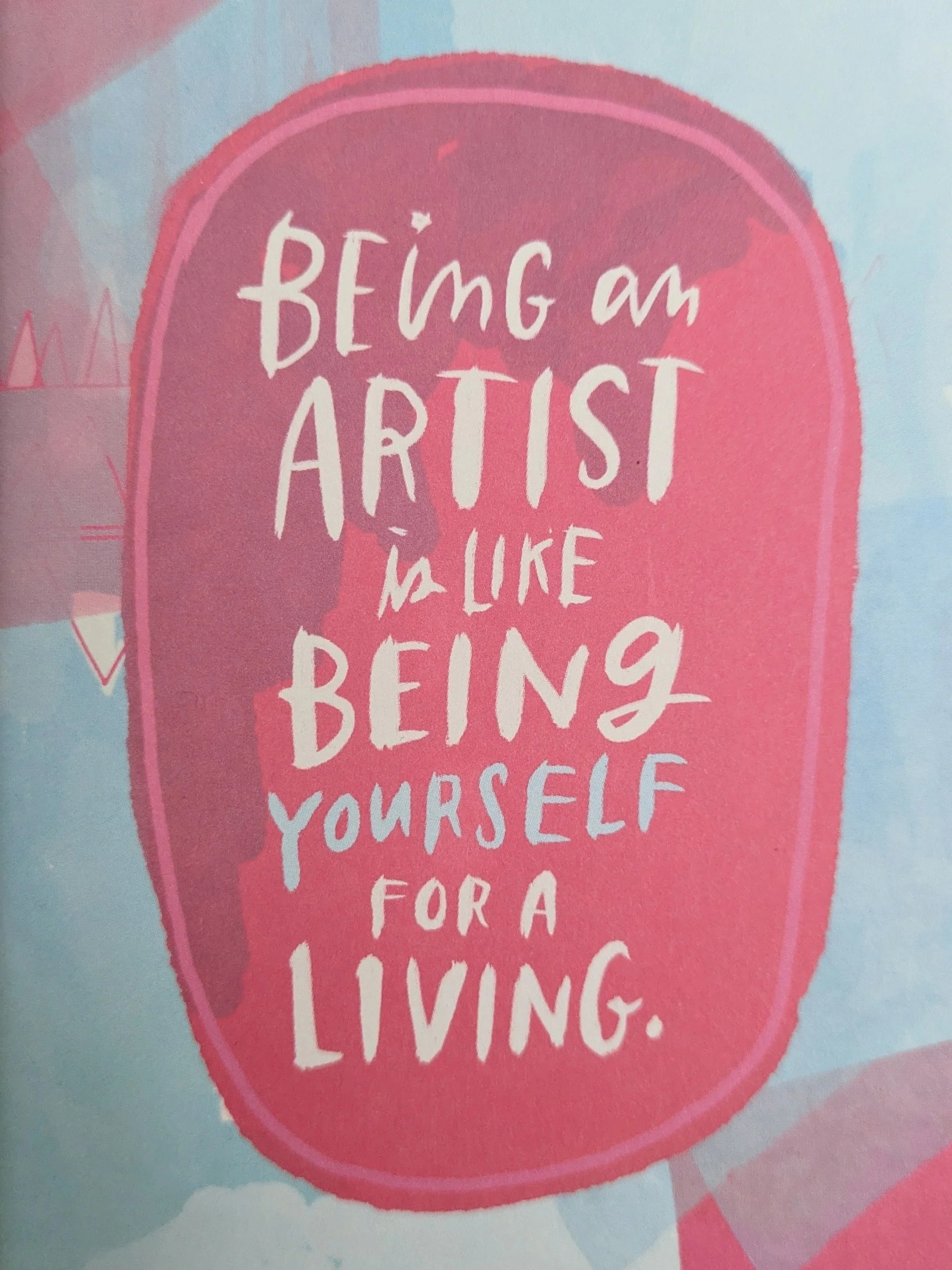
As a visual artist my personal and professional realms are quite intertwined; this Emily McDowell card over my computer sums it up “Being an artist is like being yourself for a living.”
That means there’s no real line dividing work and home. There’s a weird interplay between my personal fascinations and publicly sharing the tangible outcomes. Artmaking is my vocation; I seem hard-wired to explore and manipulate materials to make some sort of sense. I certainly don’t have to engage in the business of being a professional artist who exhibits and sells sculpture, but I choose to do so. It’s a means to forge connections across space and time and also fund the ongoing endeavor.
But as a self-employed sculptor (and, similarly, as a mother) I regularly operate within a void of institutional support, structure or feedback. Work is not something I can put down at the end of the day. I mean, I can try. But, like parenting, I can never turn off the awareness. And there’s no end in sight, no retirement planned for either realm, by choice. I love a lot of it, but it means things often feel unfinished, like I’m not putting enough into either, despite all that I do. And a birthday highlights the passage of time: why haven’t I figured this out better by now?
Parenting keeps morphing as the kids (and parents) get older, but the art career piece often feels from the inside like a perpetual cycle that depends on factors over which I have little control. And from the outside, the career outlook seems dubious at any age:
“This is one of the difficulties in explaining art to people who don’t feel its pull. From the outside, becoming an artist can look ridiculous. You train for years for a profession with no clear entry point, no salary, no pension, no HR department, no normal ladder, no guarantee that talent will be noticed and no guarantee that being noticed will help. You make things that cost money to produce, store and frame, then wait for someone else to decide whether they’re worthwhile. You work in solitude, then submit yourself to the judgement of people who weren’t there when the work was made. Then, if you survive long enough, you discover that even success isn’t necessarily enough to live on.”
-Greg Rook, Blackbird Rook
https://substack.com/home/post/p-208435237
I’ve already spent about half of my life pursuing a career that is difficult to pin down. I was good at school because I could identify and achieve the measurable steps towards clearly defined success. In contrast, a career as a practicing visual artist is often a sprawling, meandering thing without a reliable route. I’ve struggled with the ongoing grind of getting my work seen, shown, and collected… and now I’m no longer a young or emerging artist. There are dark moments when the quote above feels like the whole picture. I pull back from sharing what I’m working on. I resent the imperative to sell, to post, to bare myself to audiences looking for a quick hit of entertainment. I know from my own experience and what I’ve observed among my peers that there are a lot of ways to be “a successful artist” in the real world. Yet I’ve come to realize that in the deep dark recesses of my psyche my competitive self has hung on to the vague idea that “making it big” in New York and thus becoming known outside the art world is the true pinnacle.
My brain is comparing me unfavorably to artists like… Jeff Koons? Whose work (which he doesn’t personally fabricate) I don’t like at all?
That’s ridiculous. Don’t I know better at my age?
The technical, physical defininitions of recalibrate are to fix a tool that shows wrong data, to set measuring devices back to zero, to adjust machine parts that drift out of place over time. It can also describe the act of changing goals or expectations when life (or a mental shift) changes the landscape.
I’ve been feeling art’s pull for as long as I can remember. The sheer pleasure of using my hands, eyes, and brain to shape materials has been a constant in my life. In the leadup to my 50th birthday I’ve been taking stock of the disconnect I often feel between the artmaking and the art business.
This summer I took a step back from the constant pressure to publicly show up as an artist in favor of identifying what actually serves me. I don’t currently have any big projects that require tricky problem-solving amid hard deadlines. I had no excuse to put off thinking about longer-term concerns. I had experienced some disappointments and rejections and dispiriting advice on how to move forward. I was feeling trapped by external expectations that I stay in my lane as far as subject matter, color, process, and material. I thought I needed to be more formal, more serious, less playful. I was (and still am) stressed by the depressing news of our country’s apparent trajectory and the advent of thoughtless artificial intelligence (none of which was used for this essay). I felt a real sense of distance from my authentic artist self. Despite all my professional accomplishments thus far, I was paying attention to negative spaces.
I went into the summer in a “reset” mode. I’ve been working on new experiments in my studio, though I’m not ready to share them yet. I spent a lot of time with my family; both teenaged sons are around (the elder is home from his first year of college) and we’ve been doing some traveling to volleyball competitions and went white-water rafting. There have been some great conversations and adulting practice.
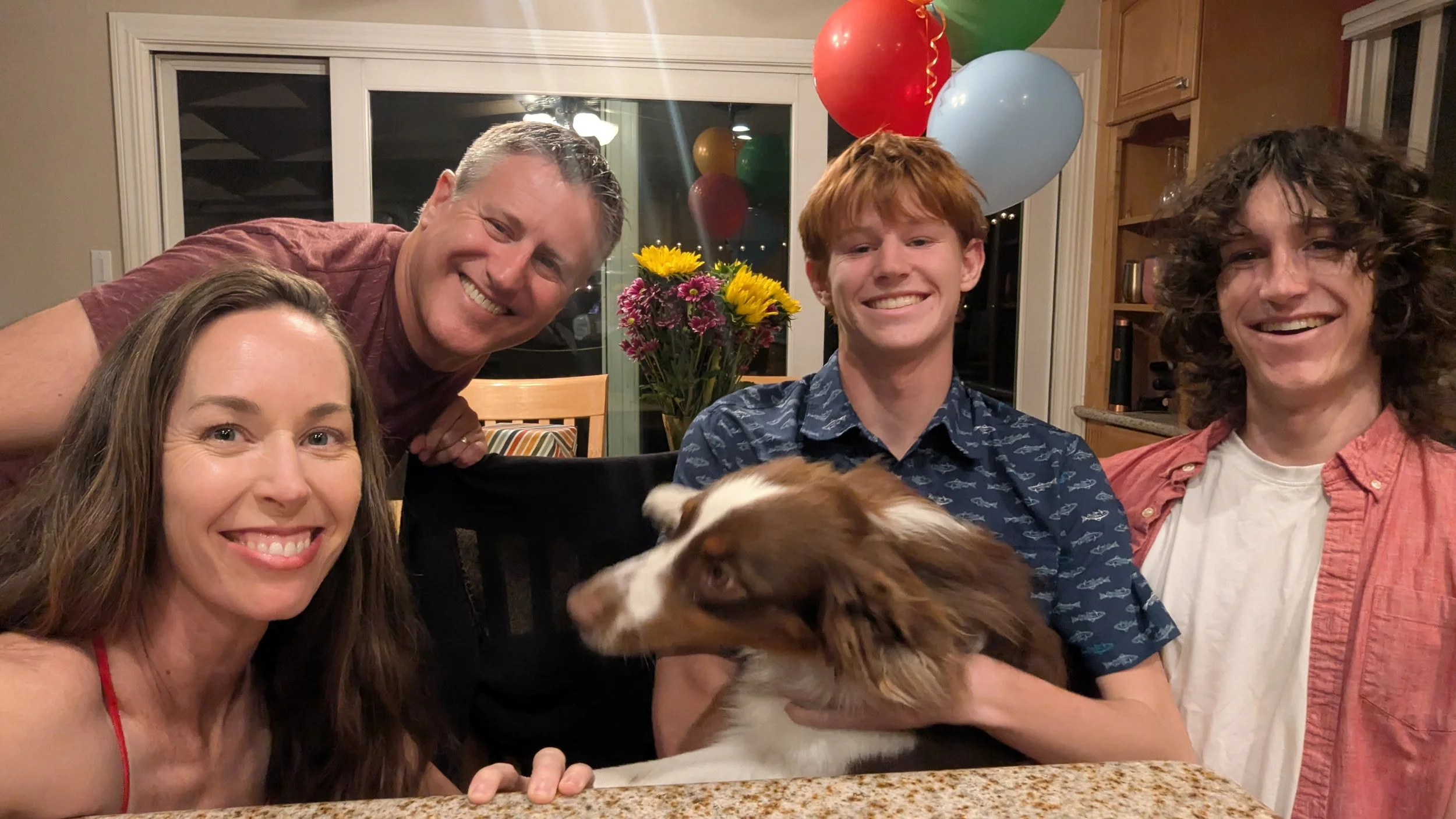
Family birthday photo with an overly energetic dog.
They, and my husband, are pretty wonderful humans whom I love to be around, and I’m lucky enough to be consciously appreciative of that in the present moment.
I also went to art camp.
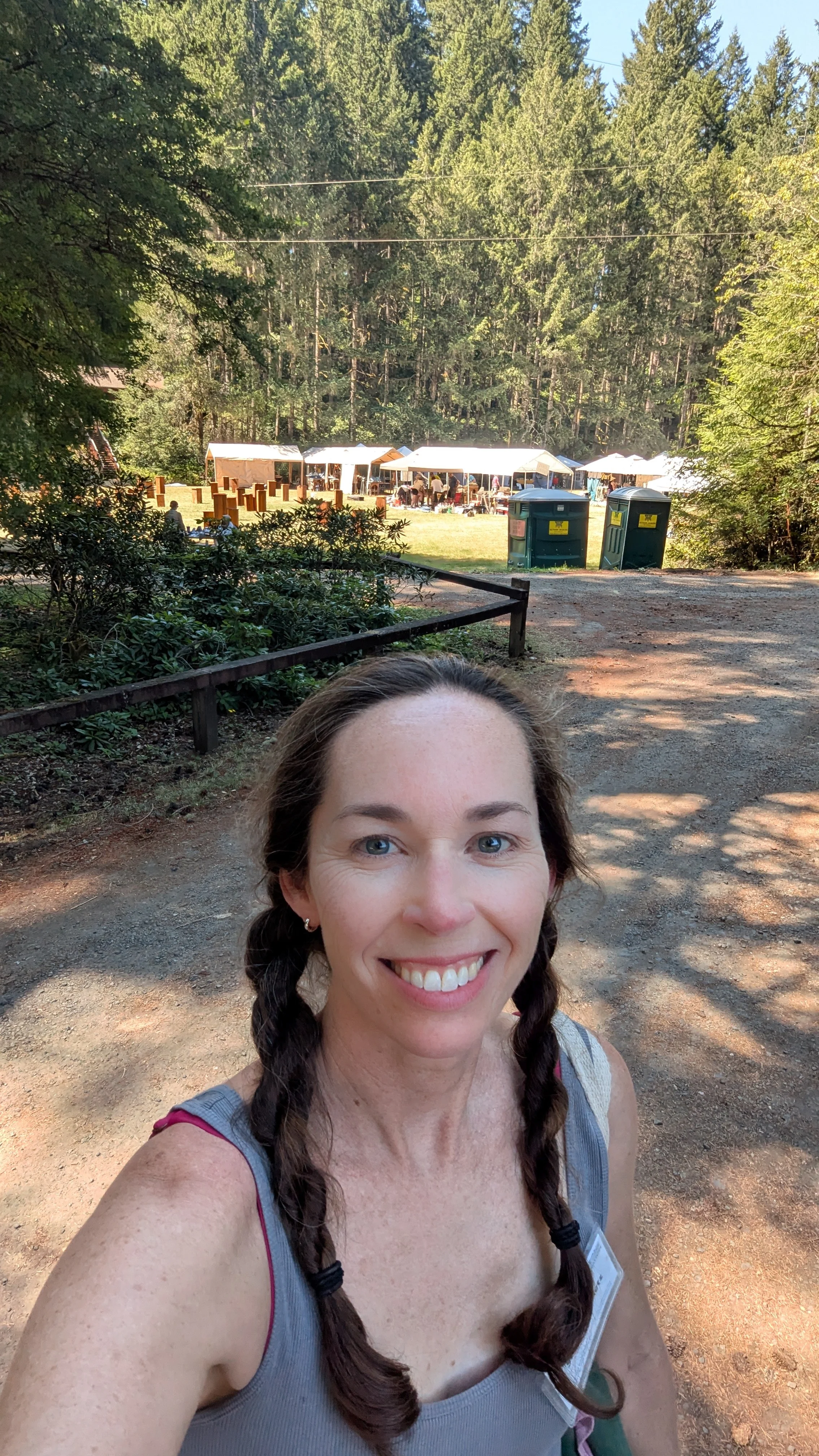
Carving tents and display pedestals set up on the lawn at Pilgrim Firs Campground.
In July I traveled to Washington for the Northwest Stone Sculptors Association’s Pilgrim Firs Symposium for a week of stone carving among my fellow sculptors. I went as a student, with no responsibilites besides sharing a slide show of my work. Although I primarily work with wool, I’m very comfortable with a wide variety of materials, tools, techniques and imagery. I would say that sculpture is my medium, and the further details are incidental. Carving stone with hammers and chisels as well as power tools is a pleasure I rediscovered several years ago at the California Sculptors Symposium.
I spent my days sharing meals with artist friends new and old, coaxing the shape of a rabbit out of a chunk of limestone, swimming in the lake, playing raucous board games, and sleeping among the trees in a cozy cabin.
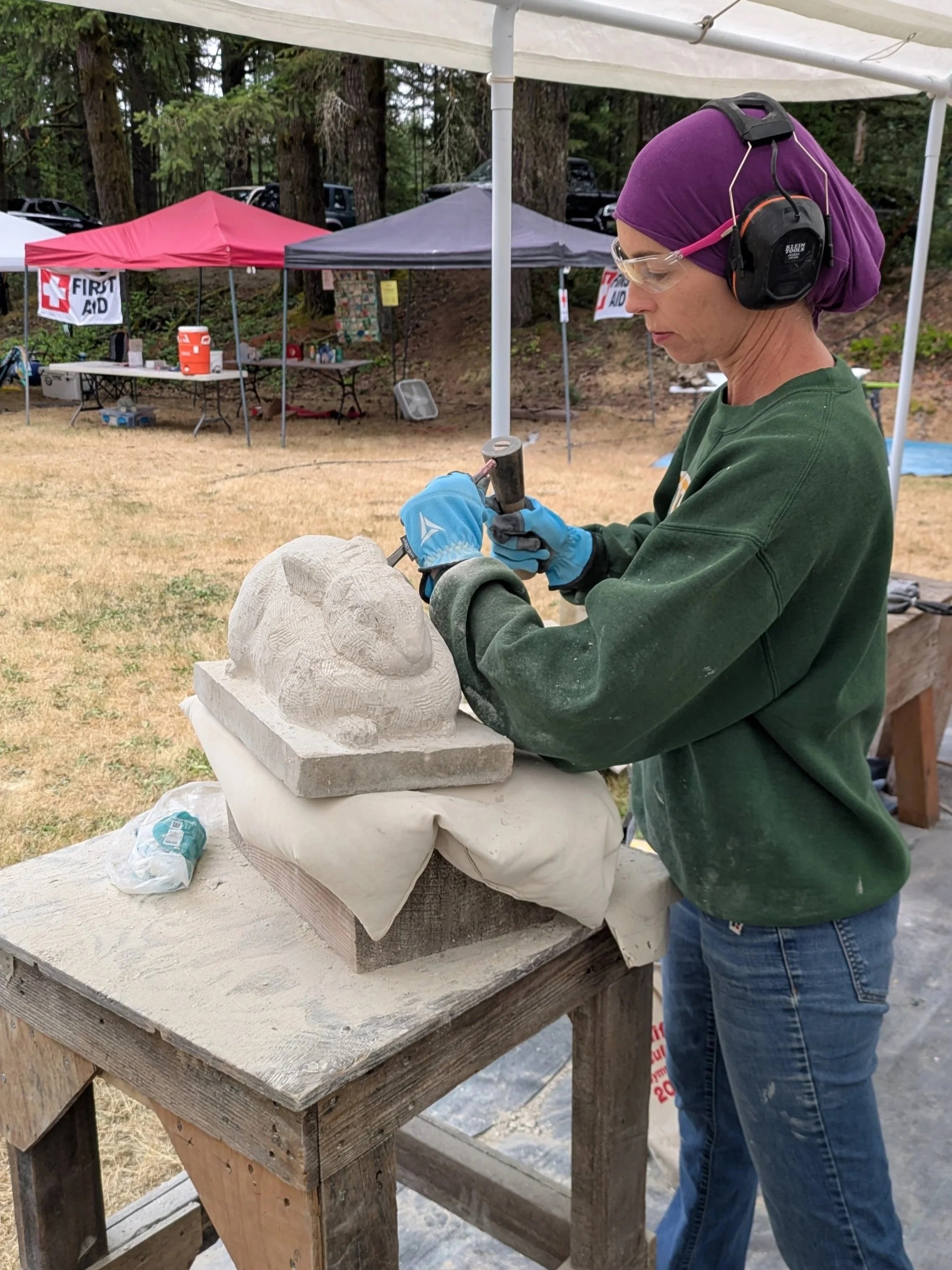
Treating myself to the simple pleasure of applying hammer and chisel to a representational familiar form.
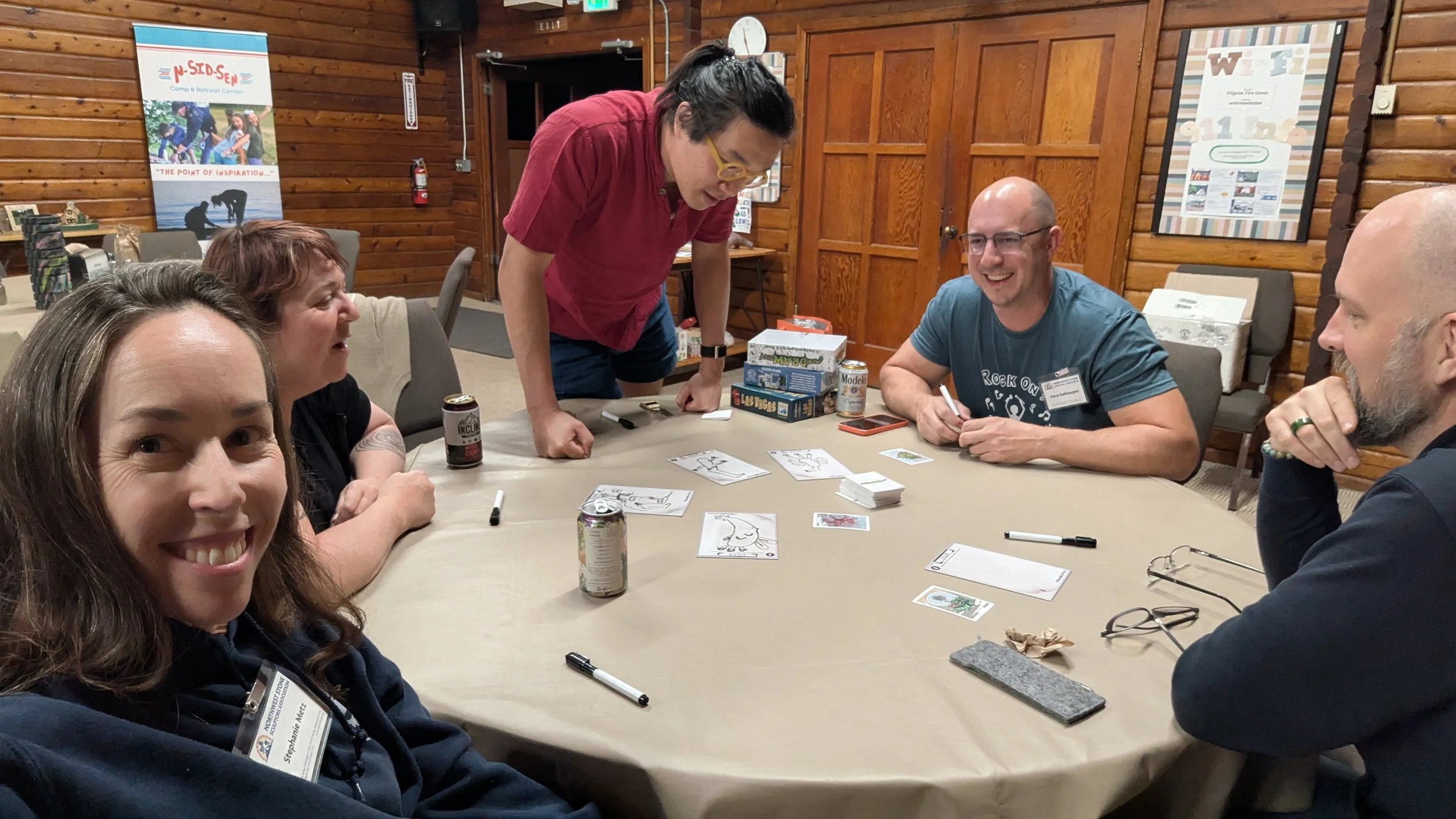
Playing games (Monsdrawsity, shown, and also Monikers, Qwirkle Cubes, and Bananagrams) with my crew.
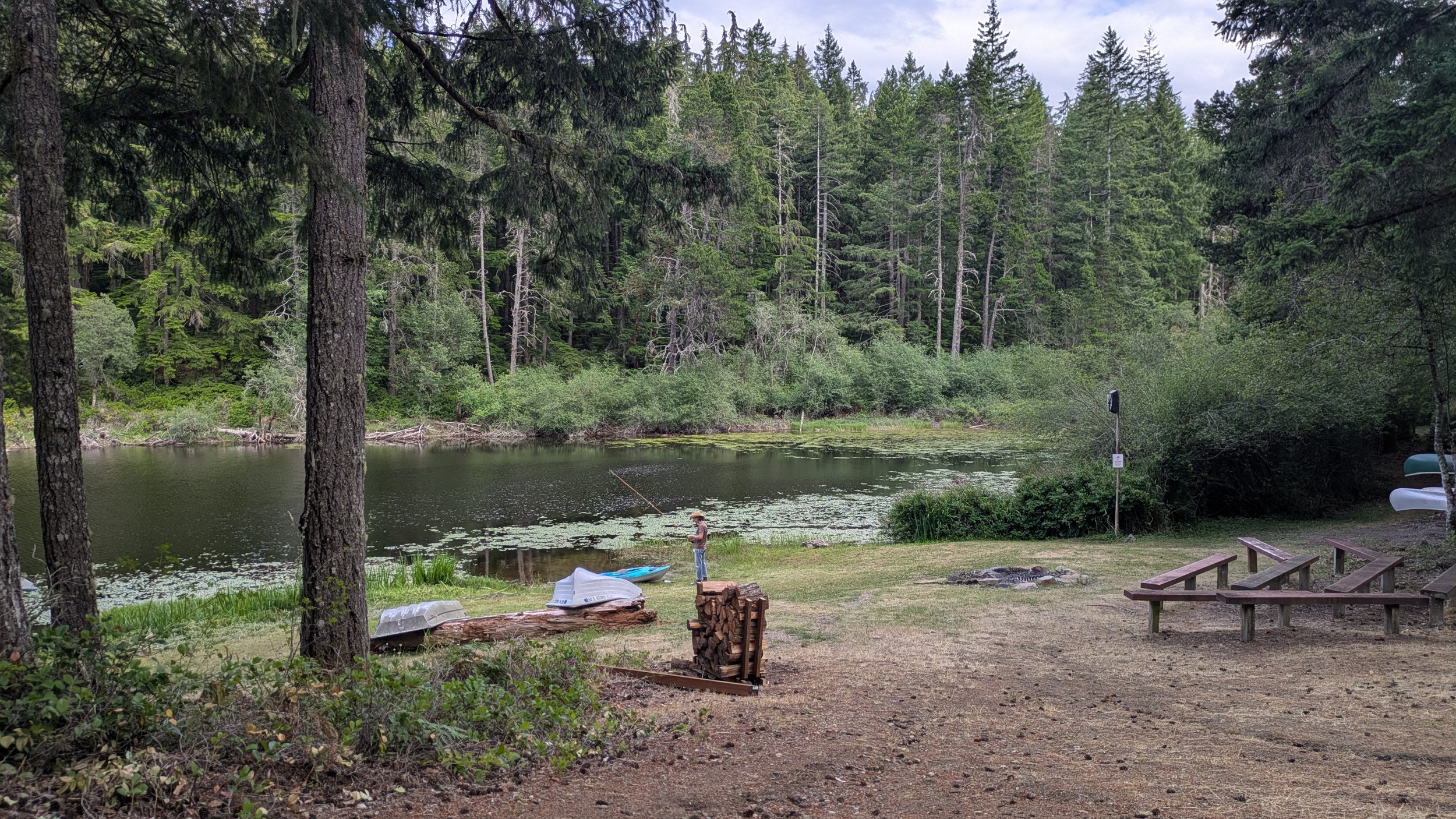
Lake Flora at Pilgrim Firs. Suitable for boating, fishing, and swimming after a long, hot day of stone carving.
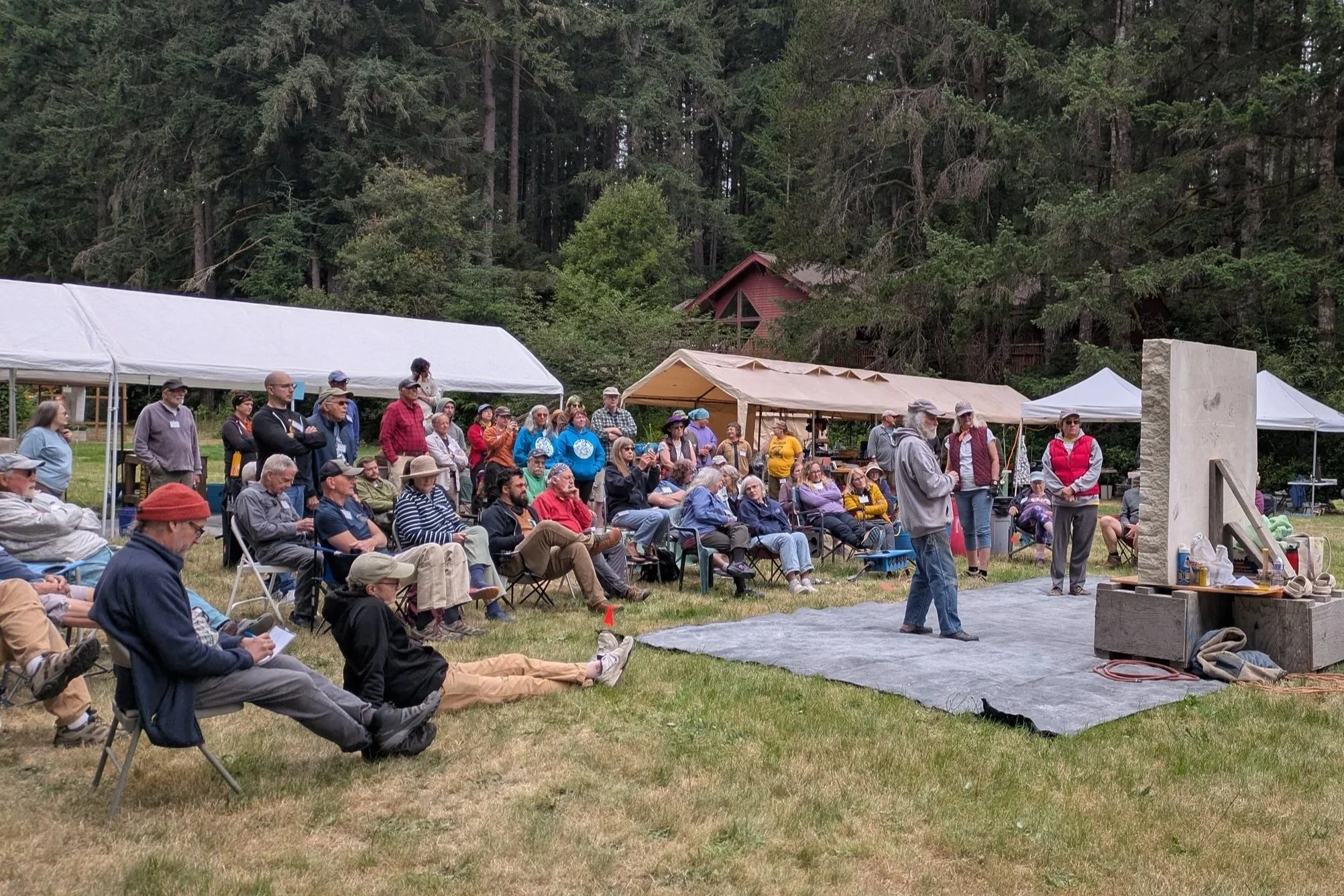
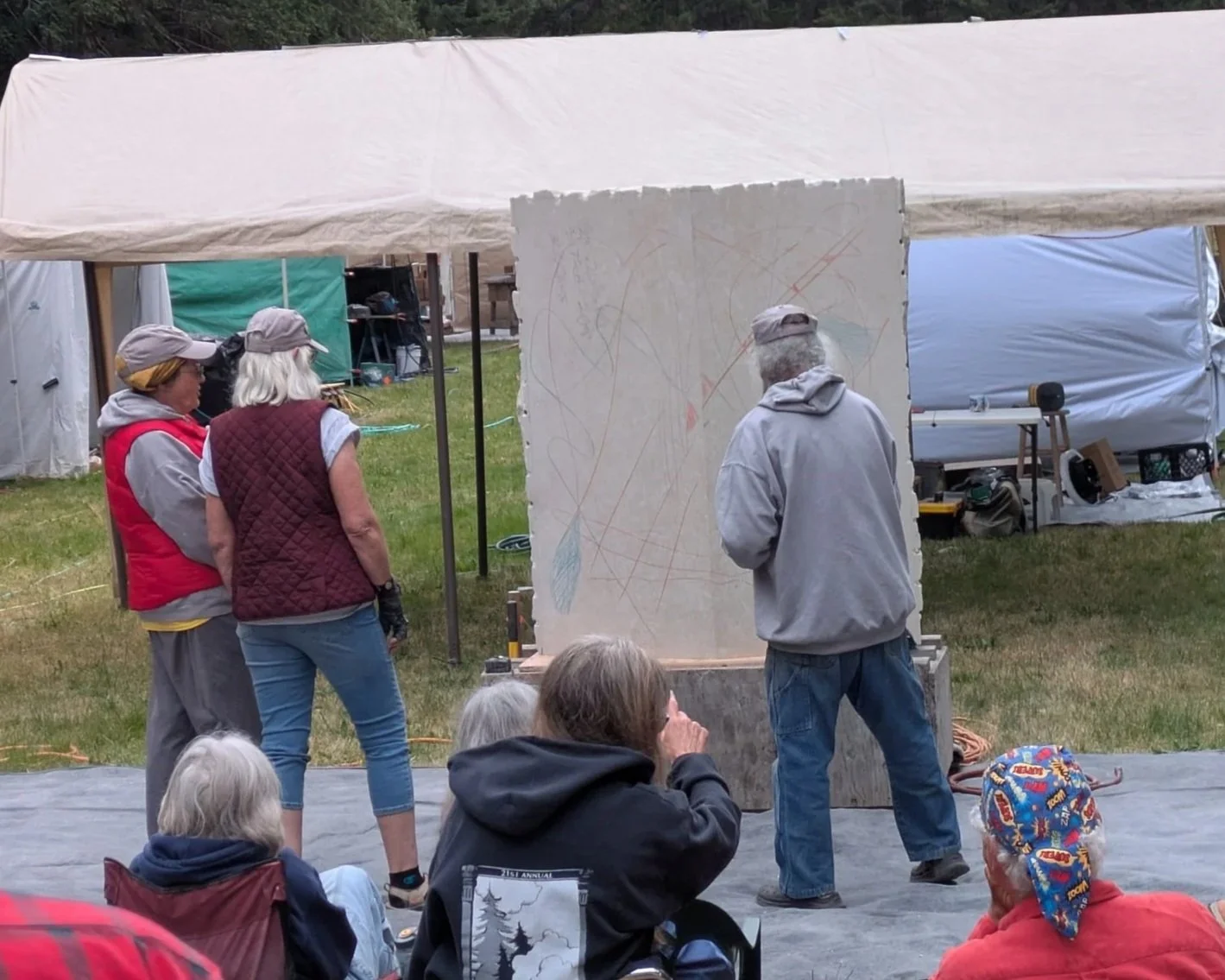
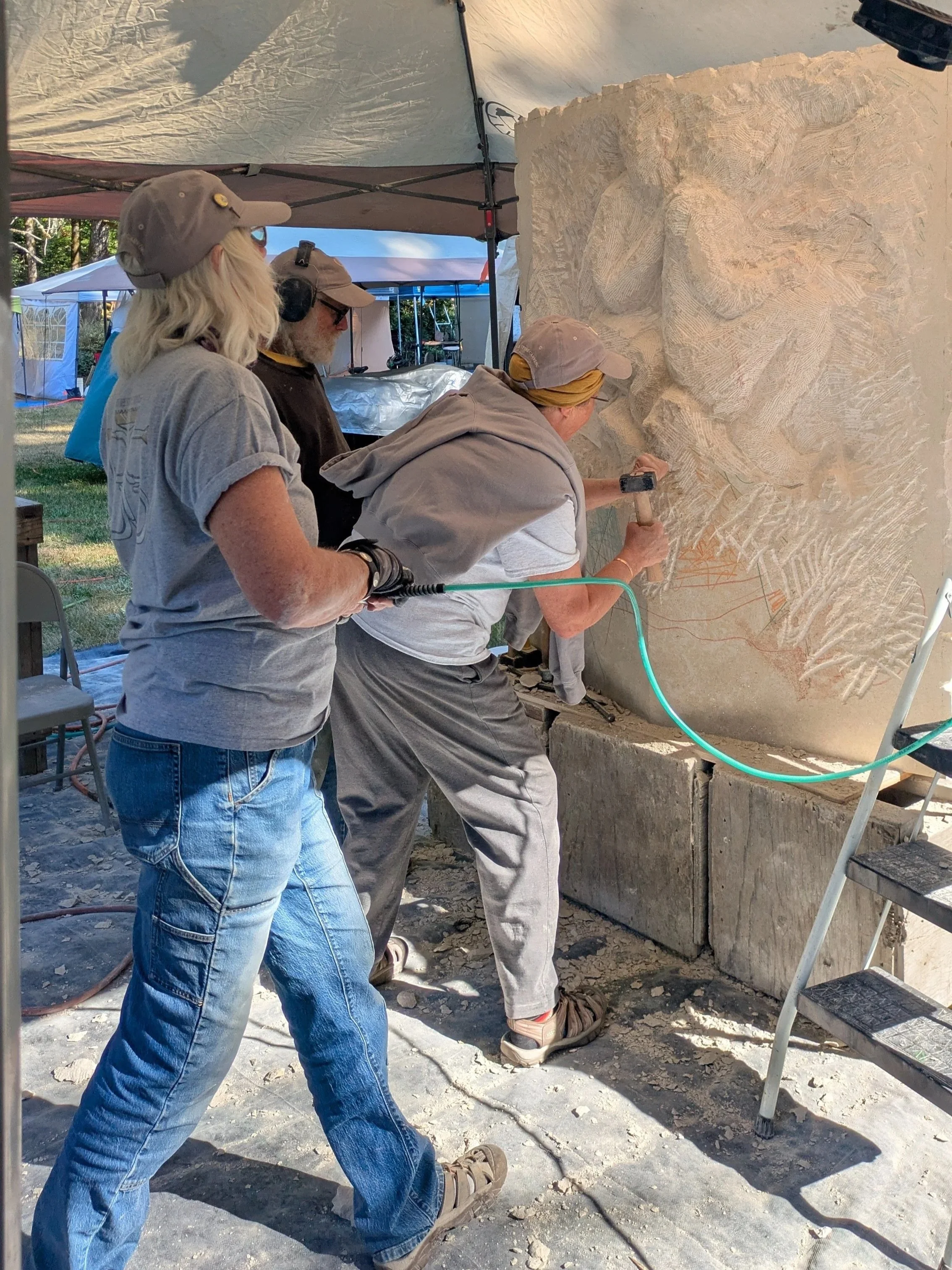
Stone carvers watching as three guest artists (Amy Brier,Sharon Fullingim, and John Fisher) work collaboratively on a huge slab of limestone (more on that below).
Besides getting to ignore the rest of life’s responsibilities and news cycles, I was also granted a sustained time in my element. Being a sculptor is a set of skills but also an outlook.
The folks at camp were a diverse group united by a shared trait: a love of learning and teaching about the physical world and its properties through the interplay of materials, tools, and human will. It may sound simple and perhaps not very essential or interesting. But for me it is truly a joy to be surrounded by people who appreciate and value my type of abilities. In my day-to-day life, in Silicon Valley suburbia, manipulating tangible materials to create meaning sometimes comes across as antiquated, almost frivolous.
Yet it struck me again and again throughout the week at camp that this was what community and connection and, for me, happiness boiled down to: people who had devoted years to understanding something that brings a sense of satisfaction, awe, and beauty generously spreading that knowledge.
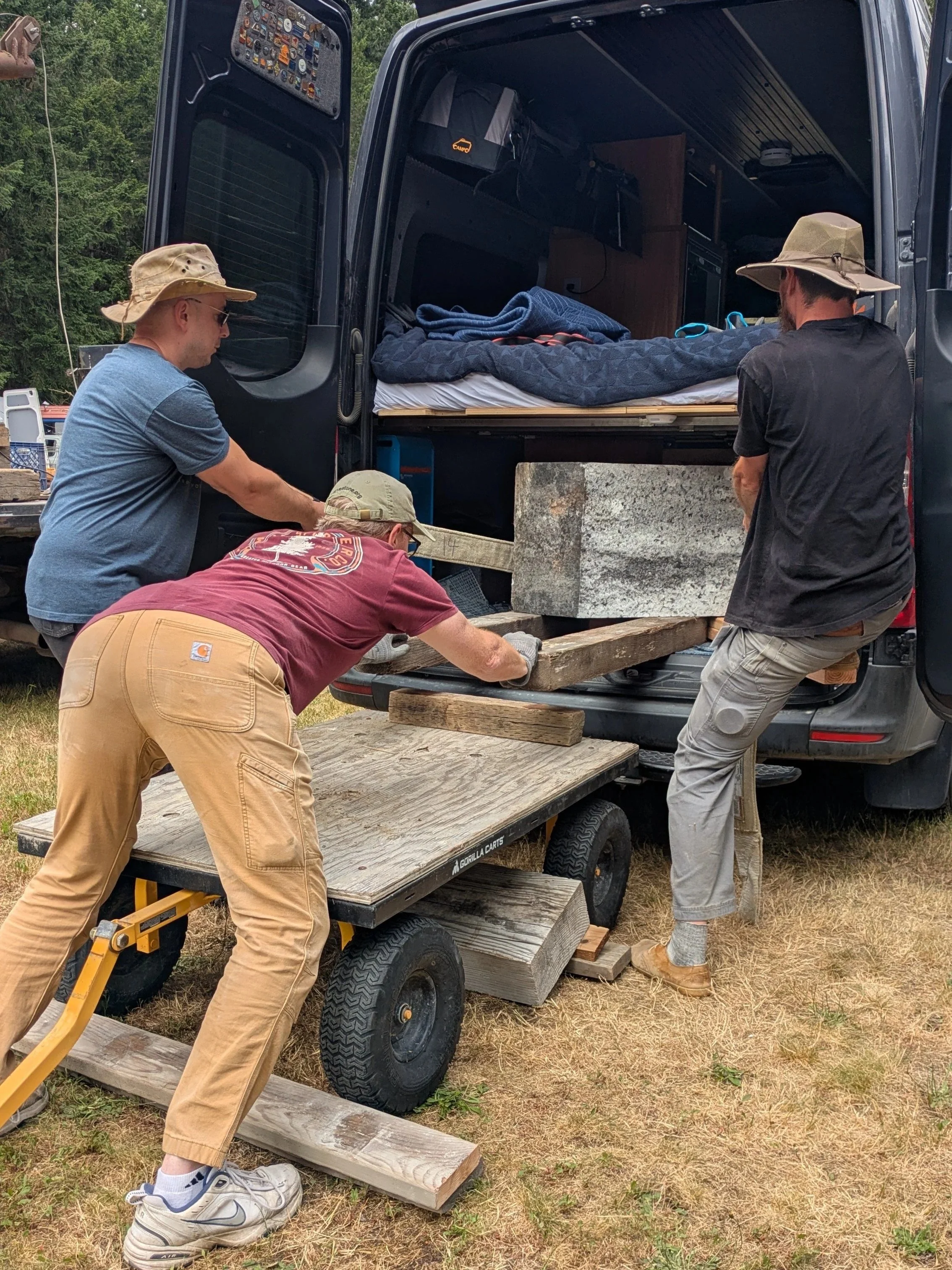
From full-time sculptors who lent use of their crane trucks (how else to transport and work on a several-ton monumental granite commission) to the instructors in the beginner tents who helped correct one’s arm position (maximizing results and minimizing pain are crucial), the sense of shared purpose was only eclipsed by the shared delight.
I felt so much joy seeing what other people created and how they progressed with their projects.
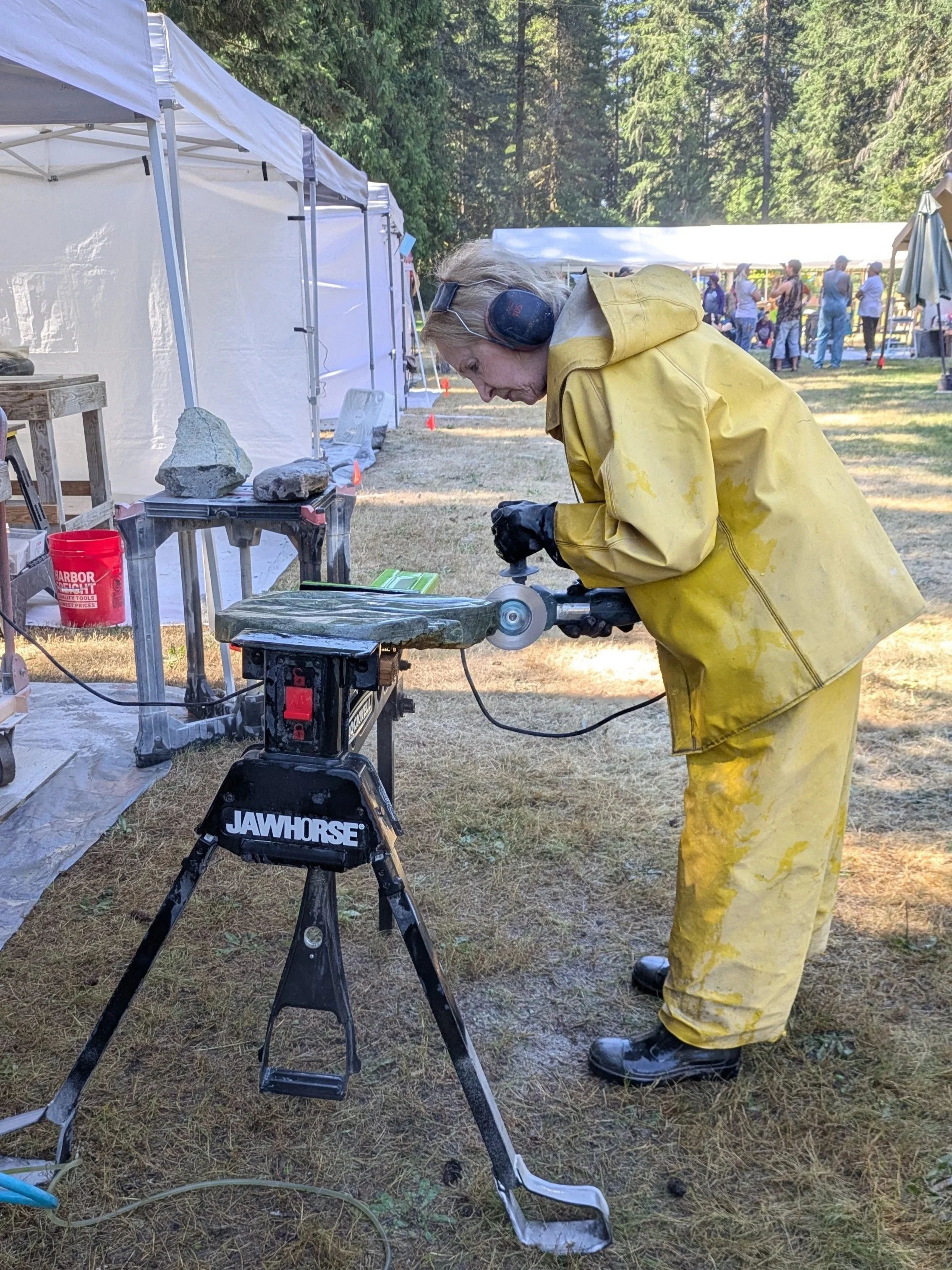
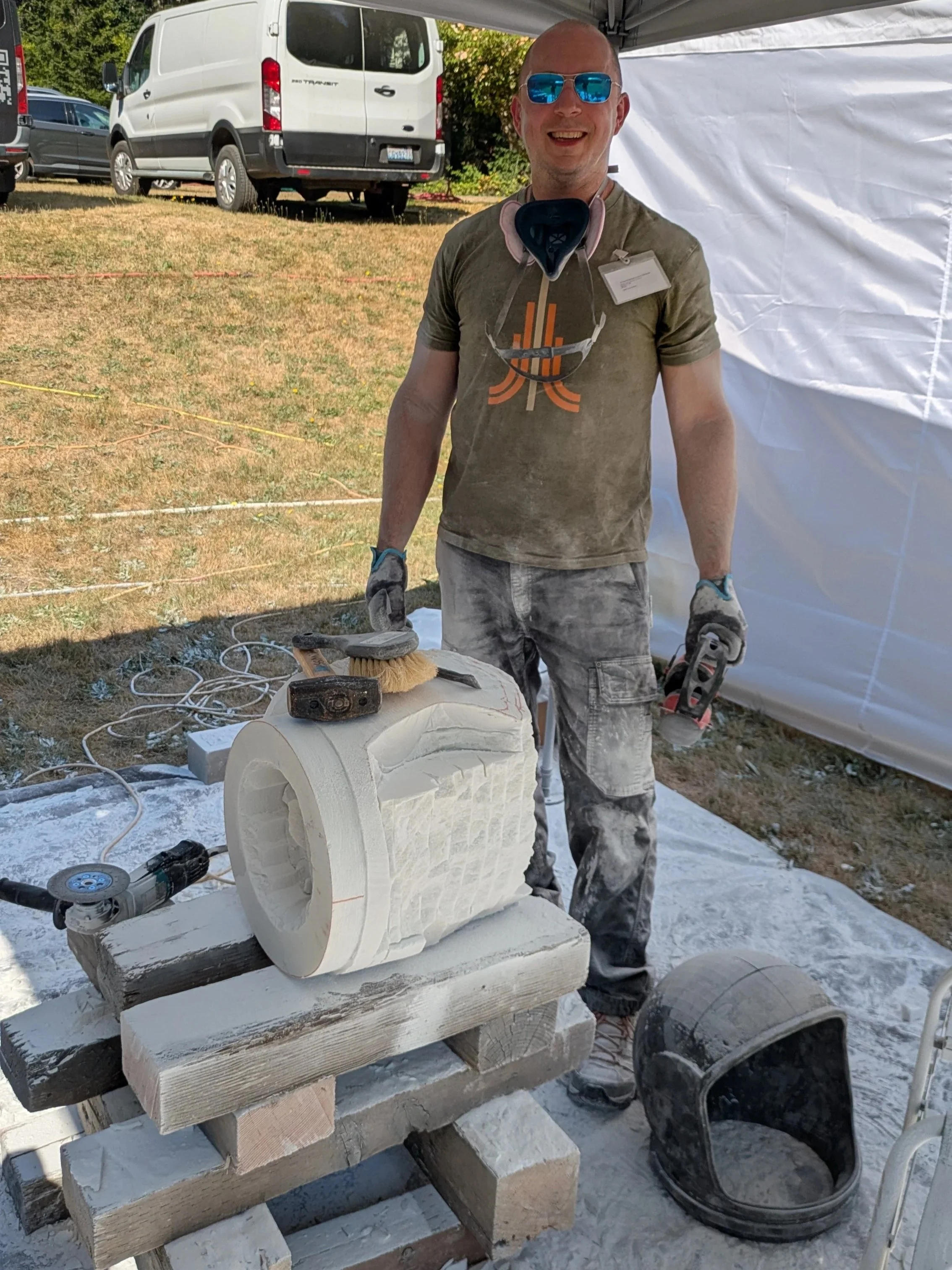
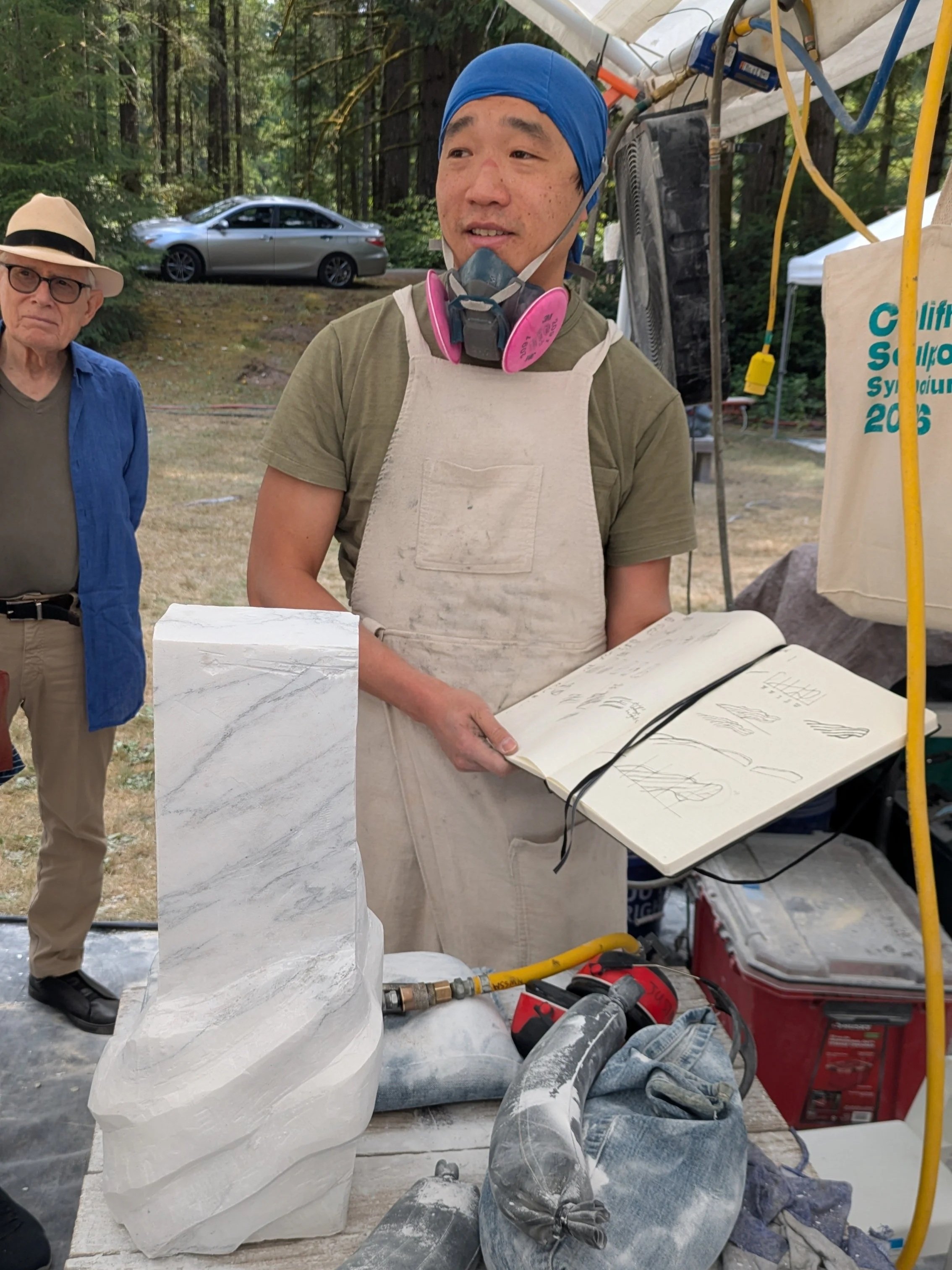
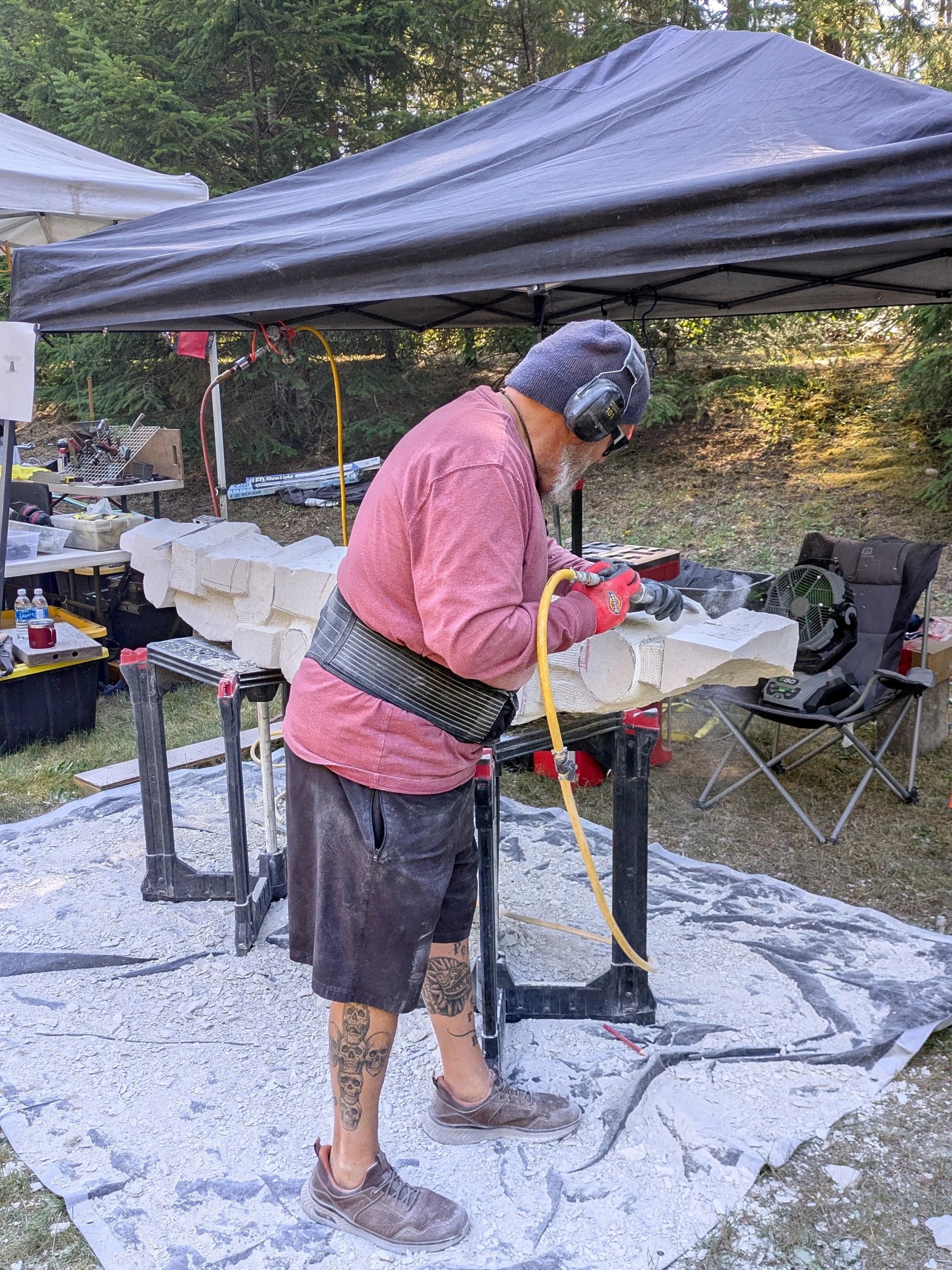
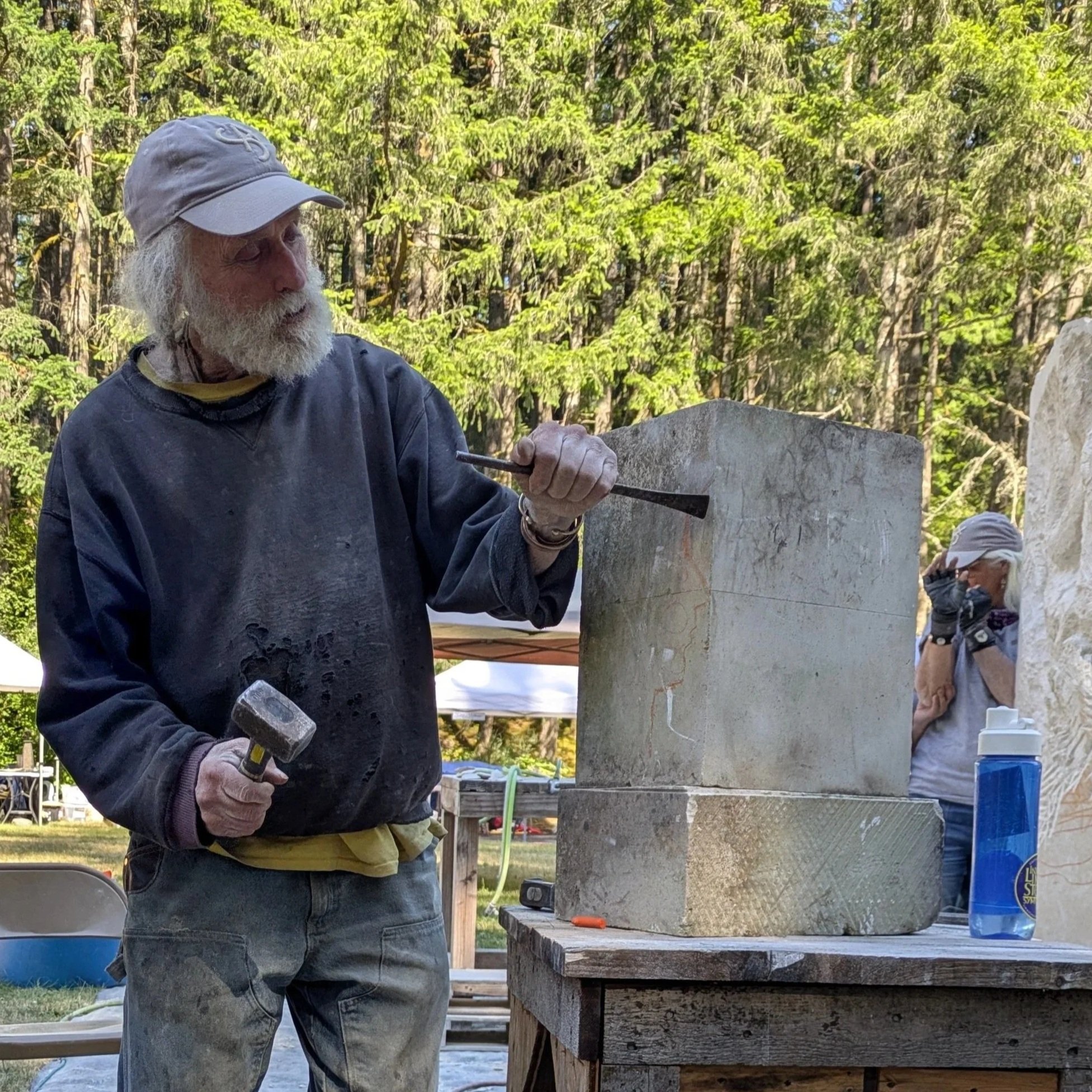
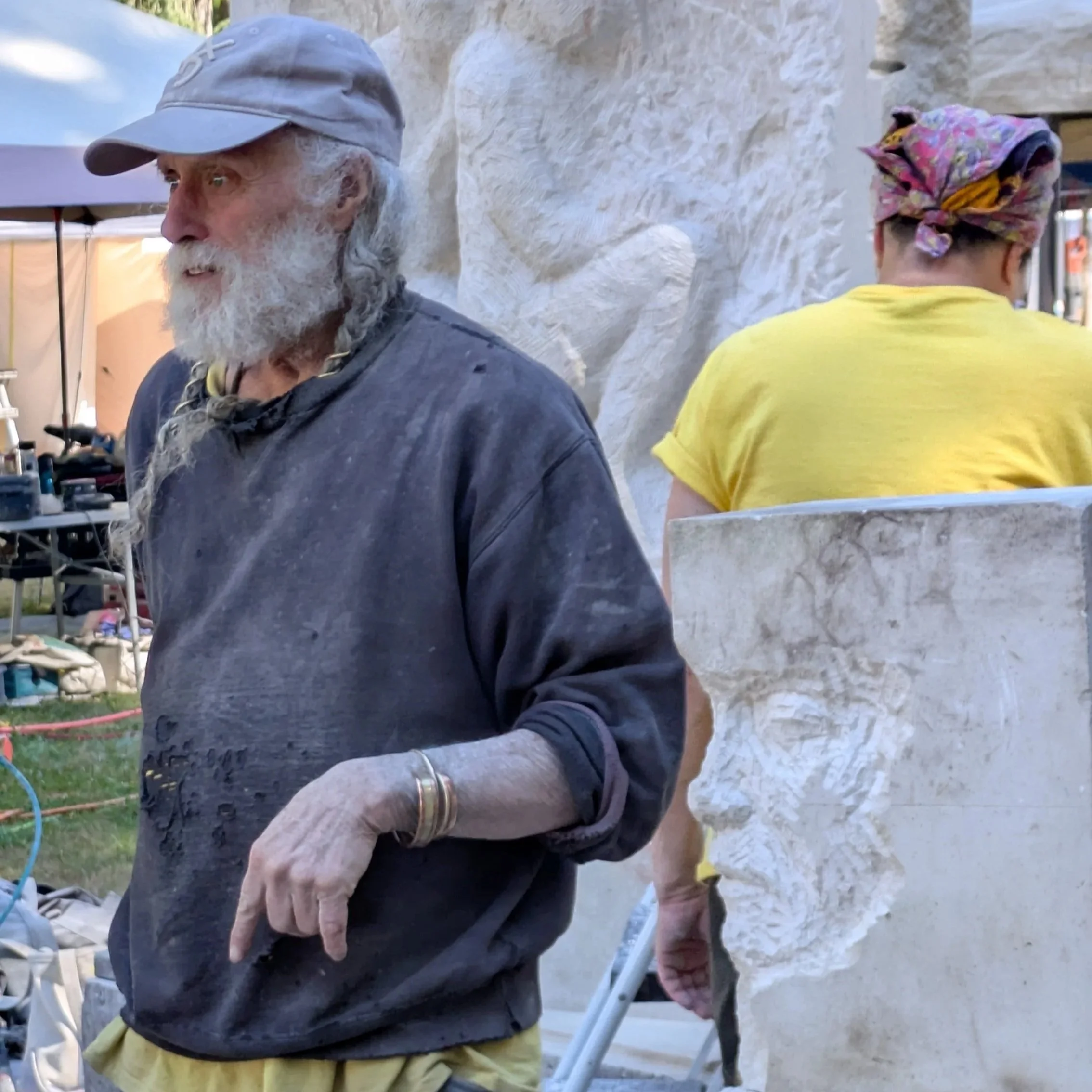
I appreciated John’s assertion that to carve a face into a block of stone one should work in from a corner, not a flat plane, since the face is shaped that way. It seems so obvious, yet it’s not at all the way most people would approach it.
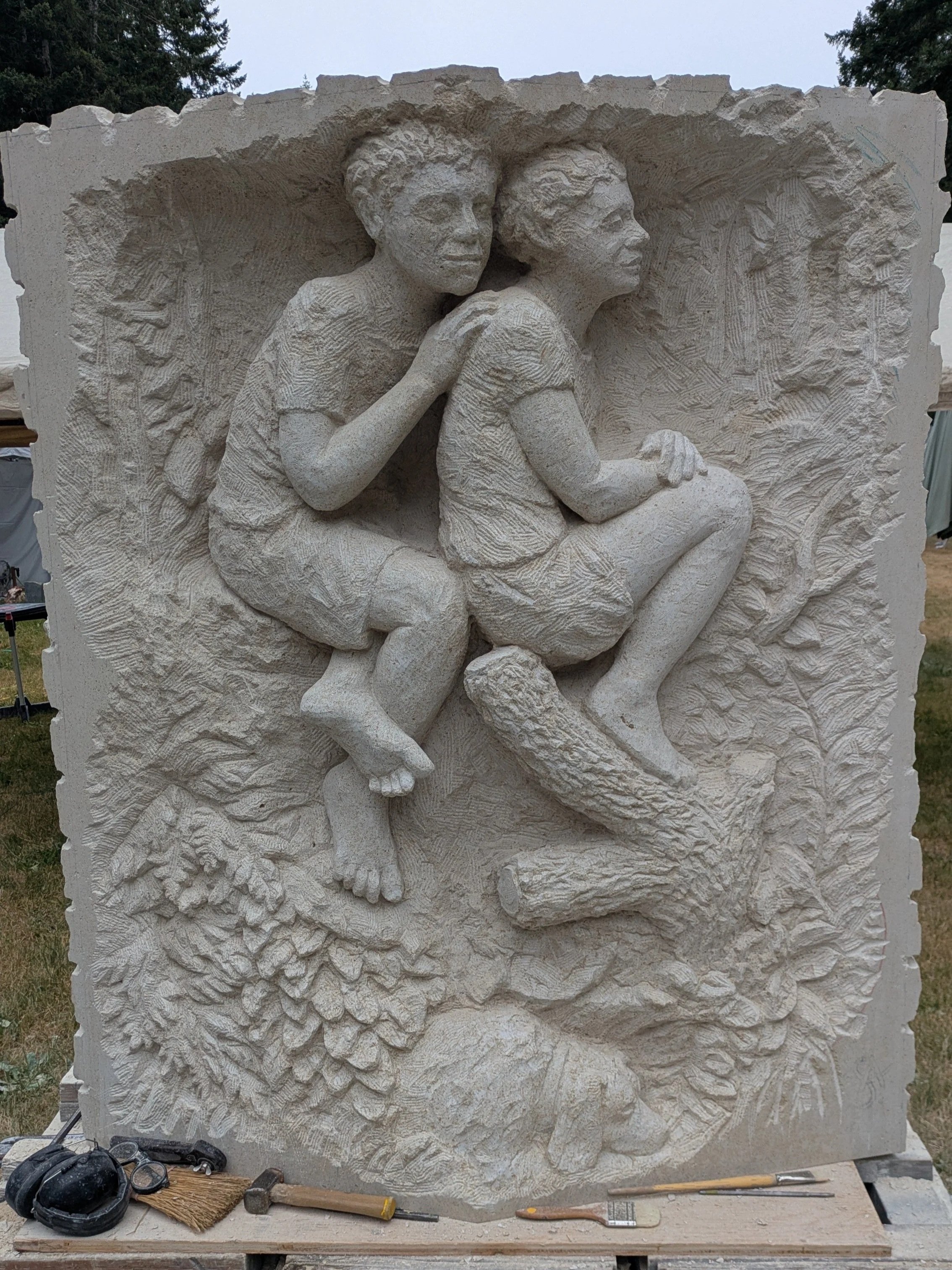
I enjoyed watching the three guest artists, Amy Brier, Sharon Fullingim, and John Fisher, work collaboratively to create a composition in a huge slab of limestone with no plan ahead of time. They began with gestural lines and loops in crayon to see what might emerge, and worked together (in just one week!) to carve a scene of children and a dog in the woods. No one took ownership of any particular portion; they communicated and trusted each other throughout.
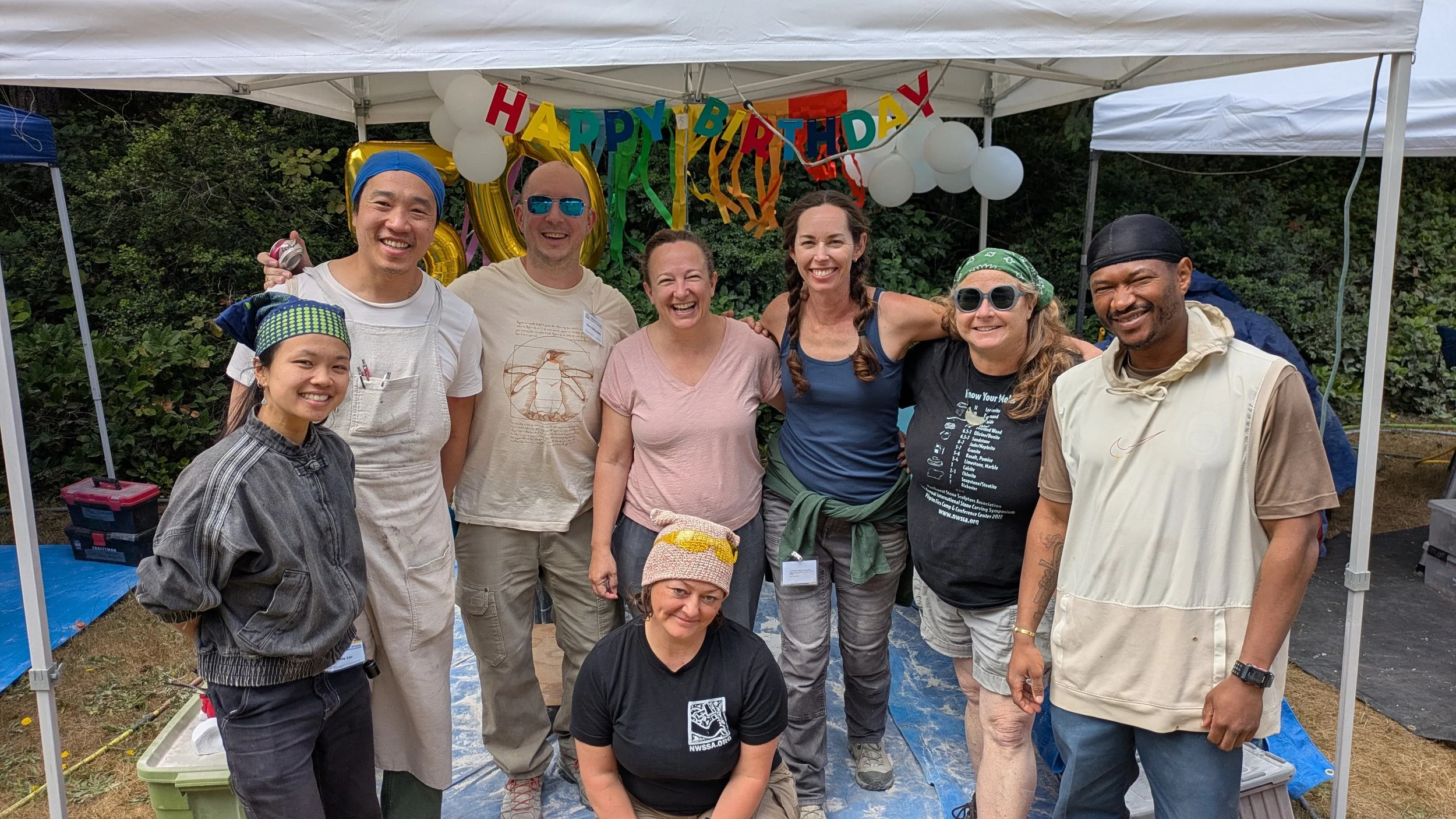
A surprise birthday celebration at camp shared with my near-birthday twin Stephanie Robison (kneeling, below) made me feel like I’m in the prime of my life right now, doing what I love and surrounded by supportive kindred spirits.
A weeklong escape working, learning, and playing among other artists reconnected me to the core of my vocation. It reminded me that all the other stuff — the administration of the arting life—is far secondary to the actual acts of living and connecting and making and meaning.
Pounding away at stone made me acutely aware of my own physical body. Aging and changing as it is, I found gratitude in all it lets me do, alongside respect for its parameters for health and comfort.
Art camp shined a light into that deep dark place in my brain that had whispered that I have to be the pop culture definition of Big Fancy Artist or else a failure. Finally acknowledging it helped me banish it.
The specter of turning 50 was a gift that prompted the recalibration.
What difference will this make in what I do and what you see of me? It may not be too obvious from the outside. I’m feeling less fraught about self-editing what to share online, so you’ll probably see more.
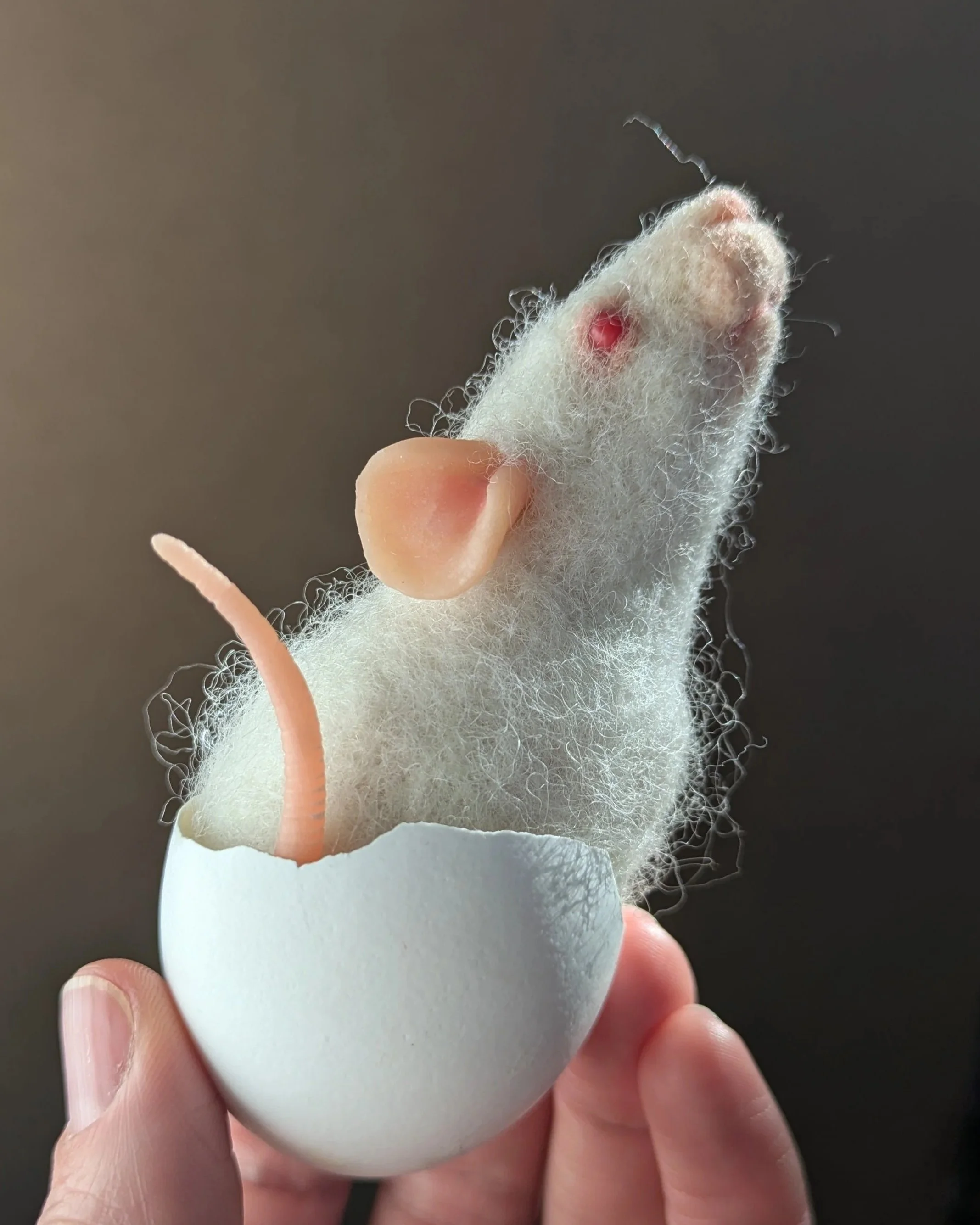
I’m happily working on three very disparate types of work at once, no longer fretting that I need to narrow my focus to one style. Here’s an unfinished sneak peak at a very representational (if surreal) piece I’m working on for The Ribbon, an exhibition in honor of Susannah Kelly at Antler & Talon Galleries in Portland in September. The thematic guidelines are “rebirth, renewal, and the cycle of life”. Yes, this is a lab rat emerging from its eggshell.
I’m also making concrete plans to increase my real-world sculpture activities with my people starting with the Hawaii Artist Collab in November! I’ll have a lot more to share about that soon.
Ultimately, I’m feeling more grounded and balanced. My to-do list is always long and I’ll probably never feel like I’m doing enough, but I do know that I AM enough.
If you haven’t yet found the things that make you feel most yourself, most alive, then I urge you to make the time to do that. Try things until you figure it out. Every year, heck, every day is a gift. Don’t wait for a milestone birthday to check in with yourself, deeply.